


We spoke with Asena Başak, the producer of 48 Hours about what it takes to create one of the longest-running true-crime shows.
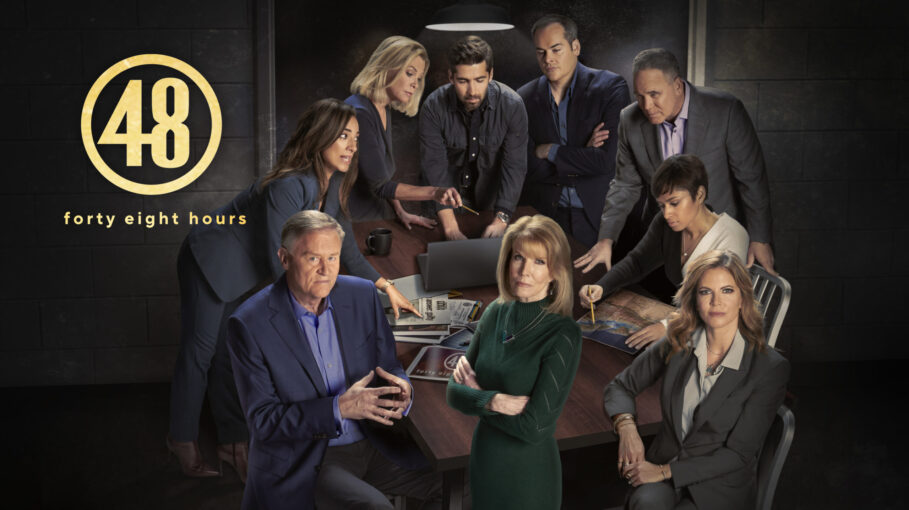
Very few TV programs can claim a legacy like 48 Hours. For 37 years, CBS’s flagship true-crime series has not only brought America’s most striking cases to the screen, but has also helped shape the way crime stories are told around the world. Still on the air today, 48 Hours remains one of the genre’s key reference points, combining thorough reporting with powerful storytelling.
For our MIPCOM issue, we spoke with one of the show’s producers, Asena Başak. We asked her how such a large-scale program has managed to stay relevant for decades, how the stories of real victims and
their families can be told ethically, and why 48 Hours continues to be one of the most influential true-crime shows on television.
You produce 48 Hours, one of the longest-running crime shows in the U.S. How did your journey begin?
I was born and raised in İzmir. I studied Psychological Counseling and Guidance at Boğaziçi University and graduated in 1997. After graduation, I moved to Los Angeles to attend a certificate program at UCLA, where I studied journalism for two years. The program also offered internship opportunities after graduation. I started out as an intern at various production companies in Los Angeles. Then, I moved to New York and began working in documentary production. Things move slowly in this field, especially when you’re a foreigner and working in your second language. I began as a researcher, then moved up to assistant producer, and worked on shows for Discovery Channel. The biggest turning point in my career was the 1999, İzmit earthquake. Discovery Channel wanted to produce a documentary on the disaster. In
1999, our team came to İzmit, filming in tent cities and conducting interviews. That experience became a defining moment in my career. In 2006, there was a temporary three-month position at CBS News. Because it was CBS, I accepted the role. Joining 48 Hours took my career to another level. I’ve been with CBS ever since. I became a producer on 48 Hours and now I create my own programs.
48 Hours is still on the air.
Yes. My most recent episode aired on January 11. The show has been running on CBS since 1988. CBS has two long-running news programs: 60 Minutes and 48 Hours. Both are very significant in television history, because staying on the air for that long is extremely difficult.
48 Hours focuses on true-crime cases. How do you choose the stories and put it all together? Could you walk us through the process behind the scenes?
Our program is a news show, so our guiding principle is impartiality. When we cover a case, we try to speak with both sides: the defendant, their family, attorneys, prosecutors, police, detectives… We must reach out to everyone and treat all parties equally.
Stories are usually selected by a dedicated planning department. This team monitors newspapers, magazines, even small local papers, all across the U.S. And because the show has been on the air for 37 years, our sources are incredibly diverse. For instance, a lawyer we featured ten years ago might reach out to us years later with details about a new case. In this business, trust is everything. 48 Hours is a highly respected program, and people trust in us. That trust greatly enriches the information and research we’re able to draw from.
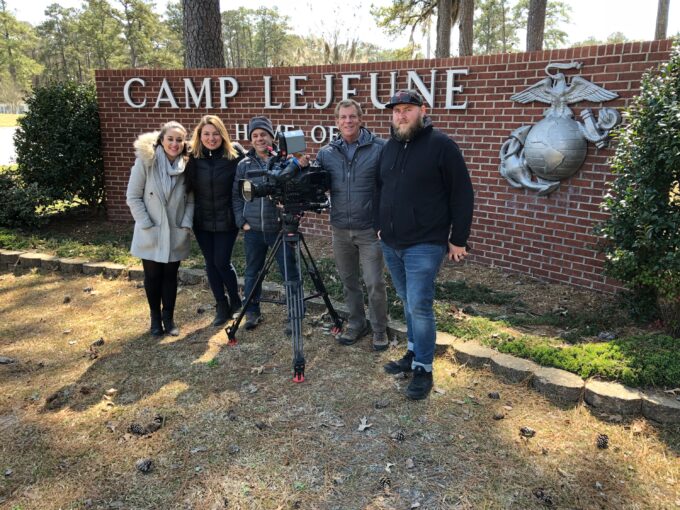
Once the planning department reviews all the leads and case files, they draw up a list of potential stories. The selected cases then come to me. The very first thing I do is reach out -by phone or email- to everyone connected to the story. Sometimes the planning team has already contacted all the key people and secured their participation, so I can move straight into organizing the shoots. Other times, it’s up to me to persuade certain individuals to talk. Most of the time I succeed; I think being genuine, showing that I value people, their experiences, and their stories, helps them feel comfortable enough to say yes.
For every case, I do my own research: I go through the news coverage and, if available, watch any previous reports. Then I reach out to all the parties involved. If someone refuses to talk, I try to persuade them, because our job is not to preach a one-sided narrative. I need to know every detail of the case we’re covering, and that’s absolutely essential.
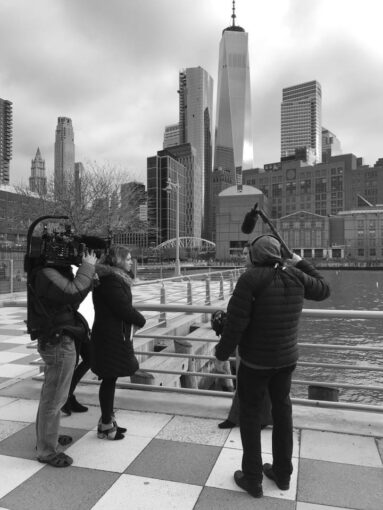
After that, we start preparing questions for each person we’ll be interviewing. We have correspondents on the show, some of whom have been with the team for many years. Together, we finalize the questions before moving into production. We conduct the interviews, film on location, and the shoot usually takes about seven to ten days. Once filming wraps, I review all the footage and take notes. In 48 Hours, each case is covered in six one-hour episodes. So I create a six-part story map, what happens in each episode, which interviews go where, how the evidence will be presented. Then I write the documentary script. Editors take that script and shape it into a one-hour episode. The scripts and rough cuts are then reviewed by the senior producer, who suggests any revisions needed. That’s how we end up with six completed episodes, each an hour long. The whole process takes about five to six months.
It’s intense work…
We have to be careful, because we’re making documentaries and TV programs about people’s lives and the most difficult moments they go through. That means we have to approach it with respect and always do our very best.
I’d like to touch on the ethical side of telling true-crime stories. As the producer of a long-running show in this field, do you think there should be certain boundaries, lines you simply don’t cross?
We do have some boundaries. For example, we never use footage of blood or bodies. We often receive material that shows victims or very graphic details of a crime, but none of that ever makes it to air.
It’s also essential for us to speak with the victim’s family and get their consent. Many times, they bring us childhood photos or memories of their loved one. When they share their stories, and as we put the program together, we’re essentially giving that person a voice again. We always have to keep that in mind.
Of course, there are cases where the family doesn’t want to talk. In those moments, we sit down for long discussions: Should we cover this case? If so, how do we tell it in the most respectful and accurate way possible? Every case is different, and we have to make those decisions carefully for each case.
Which cases have impacted you the most?
One was during COVID: the “eye drops poisoning” case. I didn’t know this before, but apparently, if ingested, eye drops can be fatal. A nurse had tried to kill her husband this way. It was very unusual. We had long ethical discussions about it, if we aired the story, would we be teaching people a method of committing murder? In the end, we aired it. After that episode, toxicology labs began testing for the substance, so in a way the program may actually have helped save lives.
Another case was in Florida. A soldier, who was married but also had a girlfriend, got his girlfriend pregnant. He killed her, put her body in a suitcase, and dumped it into the ocean from the military base where he was stationed. A few days later, the suitcase washed back onto shore at the same base. That’s how the body was discovered, and the soldier was arrested and put on trial. Throughout the investigation and trial, he denied any involvement; he claimed he hadn’t seen his girlfriend at all that night. He was eventually convicted, and I went to the prison to interview him. During that interview, for the first time,
he admitted to me that he had, in fact, been with her that night. Up to that point, he had always denied it. To hear such a thing in the middle of an interview was shocking. But in a situation like that, you can’t react; you have to stay professional. I listened calmly, and when he finished, I went back to the beginning and asked him to tell the story again. He admitted it once again. After the interview, I immediately called the detective and passed on the information. It was also shared with the victim’s family. Because for them, every detail about what happened to their daughter was important. That case had a big impact
on me.
Another important case was Crosley Green. Racism is still a serious issue in the U.S., but it was even more dominant in the justice system in the 1980s and 1990s. Crosley is a black man, and he was convicted of murder in 1989 and sentenced to death. 48 Hours has been following his case since the 1990s. We made five episodes on this case, and I worked on the last two. Many people believed he had been wrongfully convicted. Our reporting also played a role in his release after 32 years. This was during COVID, when we were working from home and travel was extremely difficult, but Crosley’s release was such a major story that we immediately organized and filmed him walking out of prison. Once he was out, Crosley got a very good job, got engaged, and started building a new life for himself. But Florida’s justice system can be a bit tough, a higher court issued a new ruling, and two years later he was sent back to prison. He’s still in prison today. I filmed both his release and his return. It was a very difficult and emotional process for me.
That’s really moving. 48 Hours has been running for 37 years, but in the past decade true-crime documentaries, films, and series have exploded in popularity. Why do you think audiences are so fascinated by true crime content?
I think there are several reasons. First, it’s a form of escape, people enjoy stepping away from their own lives and immersing themselves in stories that feel far removed. The second is empathy. Most of the people involved in these crimes are ordinary people, just like us. Watching what happens to them makes viewers think, “That could happen to me, too.” There’s also the mystery factor, it pulls people in and keeps them hooked. I also think the pursuit of justice plays a big role. Seeing wrongdoers held accountable gives audiences a sense of satisfaction.
In the U.S., amateur detective groups often investigate cold cases, and many podcasters chase leads like detectives themselves. What are your thoughts on this
trend?
Yes, it’s especially common in the U.S. People come together online to dig into cold case files, and many of these stories actually start out as podcasts. Our planning department keeps an eye on these groups and their work as well. There’s also something that has started in the U.S. called genetic genealogy. With DNA analysis, you can sometimes discover that you’re related, for example, a cousin, to someone who committed a murder 30 years ago. That kind of thing can lead to some really unusual cases.
It sounds like you start from scratch with every case.
Exactly. With every case, we really do start from scratch. That’s why the sense of fulfillment never fades. Each time, we have to learn everything: the people, the documents, the evidence. Impartiality is crucial. No matter what case we’re covering, we have to put our own feelings aside and make sure every voice is heard.
At the same time, this must be emotionally difficult work.
There are definitely times when it gets very hard. For example, when judges allow us to film in court, we follow the entire trial. If a case lasts a month, you’re there every single day. You’re in the same courtroom with the same families everyday. You feel their pain. The witnesses, the testimonies, the evidence… You have to listen to it all with the same focus. These are very heavy processes, and they can be emotionally exhausting.
This interview was conducted by Özlem Özdemir and originally appeared in 221B Magazine’s MIPCOM 2025 issue.