
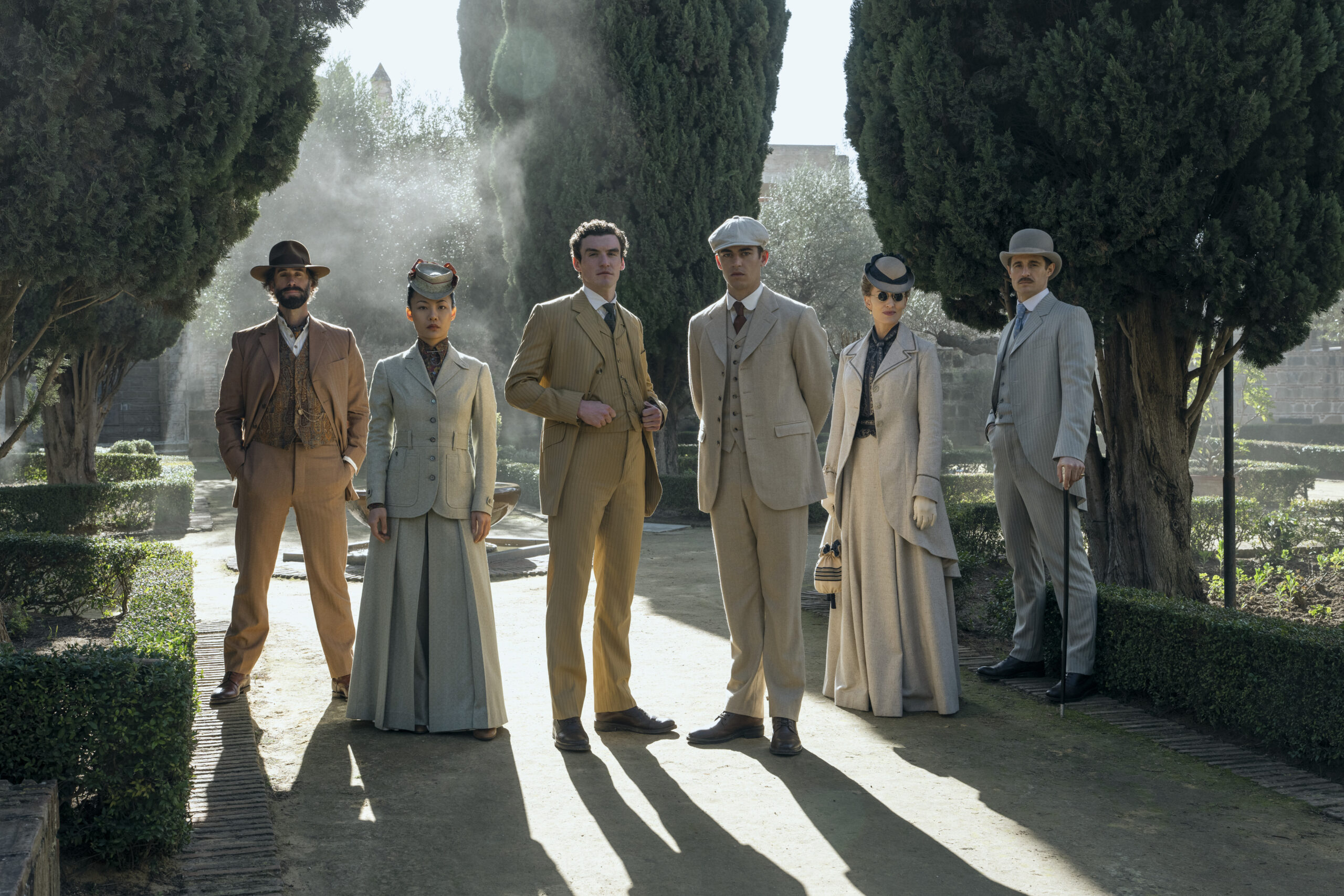

Sherlock Holmes, created by Scottish author Sir Arthur Conan Doyle, is the most famous fictional detective of all time.
With a total of 4 novels and 56 stories, the fame of Sherlock Holmes is a myth passed down from generation to generation. For this reason, returning to the Sherlock Holmes universe and 221B Baker Street always has a charming and mysterious side.

This intricate adventure, which began with A Study in Scarlet published in 1887, became a permanent fixture in literary history with the publication of A Scandal in Bohemia in 1891. Since then, this private detective has transformed into a popular culture object exported from the United Kingdom to the entire world, characterized by his specific traits, behavioral patterns, and investigative methods.
Furthermore, Sherlock Holmes, the backbone of detective literature known for its passionate fans, has been part of countless adaptations and narratives. Reflecting the paradigm shift of 19th-century Europe, Sherlock Holmes challenges the dogmatic old world with his rationalism that emphasizes scientific inquiry. Thus, he is a unique mirror of the Age of Enlightenment and the Industrial Revolution regarding rationality.
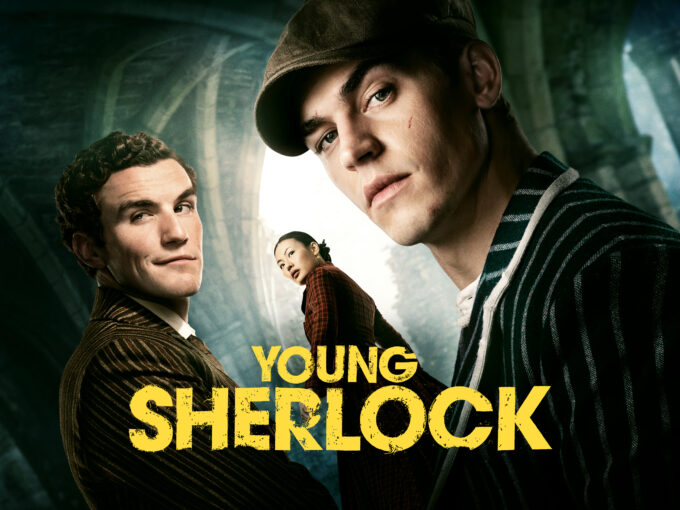
This iconic character, who has inspired various novels, is once again before us in an adaptation of Andrew Lane’s Young Sherlock Holmes series, written using Arthur Conan Doyle’s source material, and is now in the Prime Video catalog.
Of course, when it comes to Sherlock Holmes, there is an endless curiosity worldwide, from the old to the young. Consequently, the viewership rates of Young Sherlock, where British director Guy Ritchie serves as executive producer and directed the first two episodes, broke records. As soon as it was released, the series surpassed Prime Video’s flagship productions like The Boys, Reacher, or Fallout, upending the charts.
In fact, Young Sherlock didn’t stop there; it rose to number one globally faster than any of Amazon’s original productions, becoming a new hit. Undoubtedly, behind this chart success lies the Guy Ritchie effect as much as the Sherlock Holmes brand. Guy Ritchie’s series The Gentlemen and last year’s MobLand had achieved similar success. So, what makes Guy Ritchie’s cinema so attractive?
Punk Energy, Dynamic Editing, and an Eclectic Style
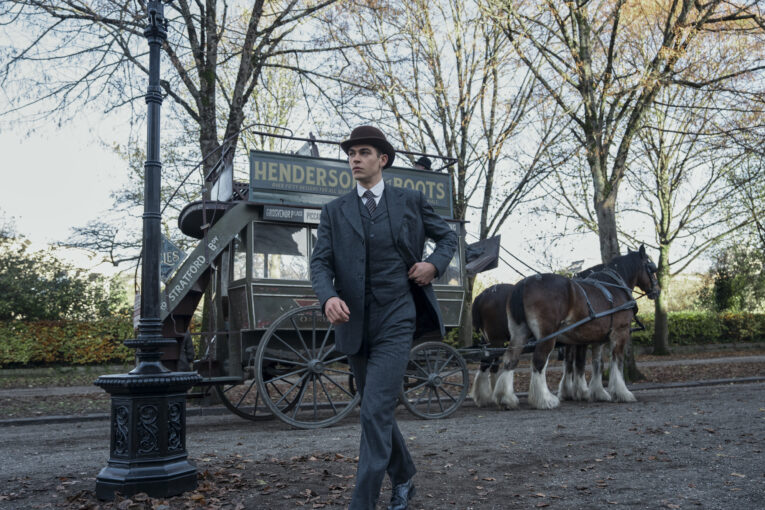
At the core of Guy Ritchie’s cinema is a vein that follows the master Hong Kong director John Woo. The influence of John Woo’s chaotic action shots and stylized visuals is evident. Additionally, Guy Ritchie’s eclectic style and tight dialogue bring Quentin Tarantino to mind. Particularly, his postmodernist fragmentation of narratives and the circularity in his plots are common traits shared with Tarantino’s cinema.
However, Guy Ritchie kneaded what he borrowed from these names into a characteristic style full of British satire and developed a cinematic language of his own. This unique language was shaped by the grand stories of characters, mostly coming from London ghettos, who exist within a crime network possessing an “old school” will to do evil and who shape the system. These colorful, multicultural, “cheeky” characters from the lower class were ready to change their fates and become gangsters to climb the social ladder.
For this reason, the primary conflict in Guy Ritchie’s cinema occurs between the elites and aristocrats who hold power and the lower classes, gypsies, and gangs trying to take their place. This class movement takes place through the use of force, cruelty, and killing.
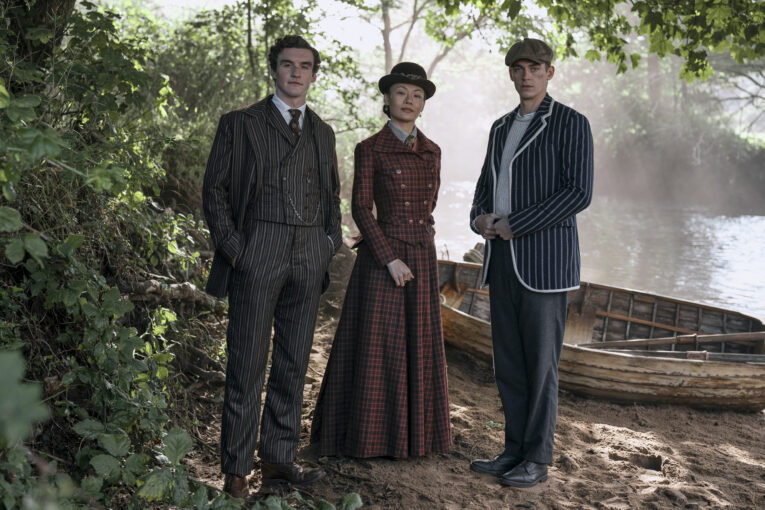
In this respect, Guy Ritchie transforms the use of violence into a claim for rights, and guns, sharp tools, and lethal objects symbolize power. On the other hand, slang expressions belonging to subcultures, strange accents, bickering, and toxic masculine language are among the defining motifs in his narratives. Frankly, when looking at Guy Ritchie’s cinema, one can capture the class structure in the United Kingdom from an interesting perspective.
Of course, convoluted scripts, fast cuts, dynamic editing, and punk energy are also among the foundations of his cinema. Indeed, the use of rock or punk-heavy music complements the wild nature of his productions. A similar structure was present in the Sherlock Holmes films starring Robert Downey Jr. and Jude Law. He injected this uniqueness into the Sherlock Holmes universe and Victorian aesthetics. He exhibits a similar orientation in the Young Sherlock series.
The Youth of Sherlock Holmes and James Moriarty: An Origin Story
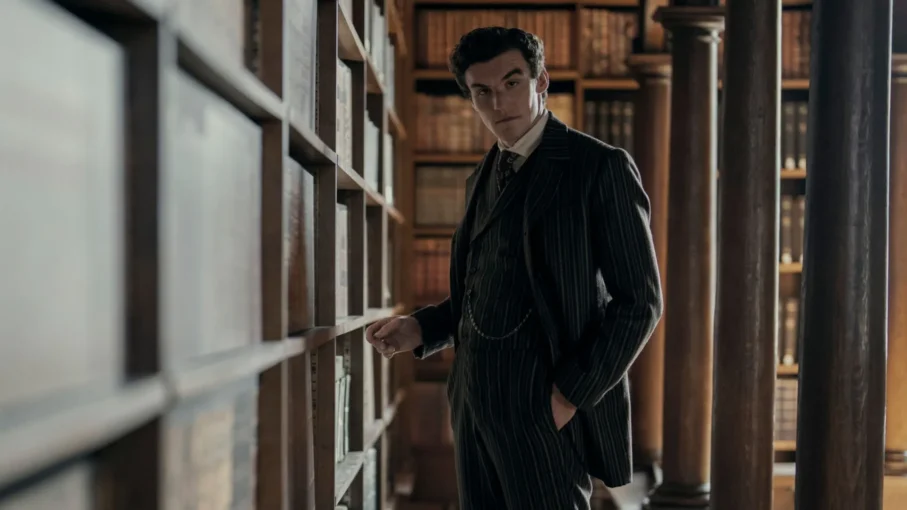
It is evident that Guy Ritchie loves the character of Sherlock Holmes and his universe. Although he stepped down from the long-awaited “Sherlock 3” film and left his place to Dexter Fletcher, he never lost his interest in this mysterious world. His involvement in this project, based on Andrew Lane’s young adult series, is due to that interest. Andrew Lane’s novels focus on Sherlock Holmes’ life before moving to 221B Baker Street, offering an origin story for Sherlock Holmes.
Frankly, the motivation that drew Guy Ritchie to this series is the desire to tell an origin story. After all, Sherlock Holmes possesses such a universe that it is impossible to get tired of it. Furthermore, in an era where origin stories and spin-offs are highly popular, adapting Sherlock Holmes’ process of finding himself and his first adventures for TV is a very correct commercial decision. On one hand, you have a massive macro-universe that you can rebuild repeatedly with different variations.
Thus, the Young Sherlock series, created by Matthew Parkhill, attempts to diversify this macro-universe and make it suitable for Gen Z. Dexter Morgan, one of TV’s most popular serial killers, entered a similar path with the “Dexter: Original Sin” series. Created by Clyde Phillips and starring Patrick Gibson, the series brought a new breath to the Dexter universe. Original Sin, which unfolds Dexter’s “dark passenger,” delves into the roots of his traumas, and completes his character arc, also made a difference with its 90s texture.
Young Sherlock also disrupts the Victorian era by using anachronistic elements and strives to build a postmodernist narrative. Frankly, we saw a similar structure in Netflix’s “House of Guinness” series released last year. Created by Steven Knight, who won hearts with Peaky Blinders, House of Guinness reached into 19th-century Dublin. The series, which tells the struggle for power among the children of Benjamin Guinness, who founded the Guinness beer empire, following his death, also used the process leading to Irish independence with “Fenian” attacks as a backdrop.
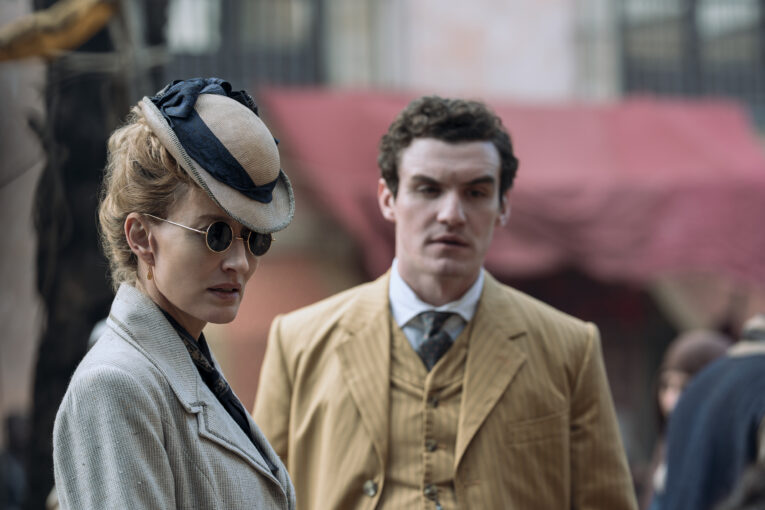
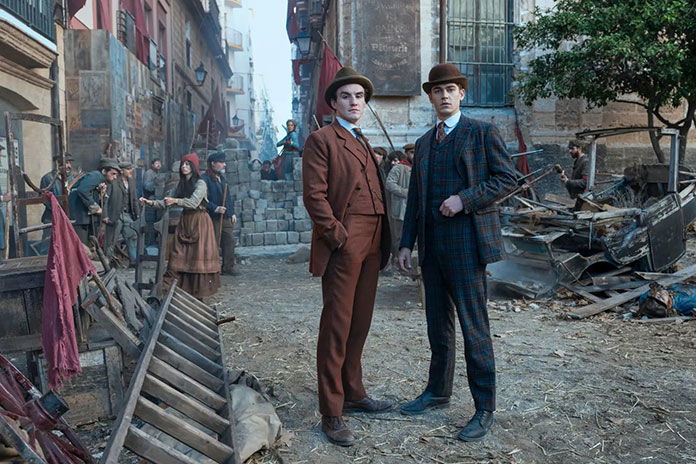
Returning to Young Sherlock from here, the series establishes a distinct narrative regarding the youth of Sherlock Holmes and his nemesis, James Moriarty. In this regard, the most crucial point is the exploration of James Moriarty’s younger years. Appearing in “The Final Problem” published in 1893, James Moriarty is defined as the greatest schemer of all time. However, for the first time, he is featured in a story concerning his youth, the origins of his evil, and how he became obsessed with Sherlock Holmes. To be clear, the “Napoleon of Crime,” James Moriarty, is etched in minds as someone tall, thin, pale, and hunched.
It is worth reminding, of course, that in the “Sherlock” series created by Mark Gatiss and Steven Moffat, star actor Andrew Scott gave James Moriarty a charismatic image. In this series, we witness James Moriarty—who possesses intelligence equal to that of Sherlock Holmes—before he transforms into the spider at the center of the crime web. From this perspective, the true star of the series is not Sherlock Holmes, but James Moriarty. In fact, the young Sherlock Holmes is portrayed as somewhat clumsy.
Nonetheless, the biggest problem with the Young Sherlock series lies in its lazy writing and the fact that the plot serves purely for action. Unfortunately, the series fails to offer the intelligence, complexity, and mystery befitting a Sherlock Holmes story. Naturally, the dialogue writing takes its share of this situation, leading to a feeling that most dialogues were rushed.
On the other hand, the tempo of the series is quite high, but the reason for this is the desire to capture young adults and new generations. Therefore, the series has flamboyant action scenes, but it moves forward without breathing space, rapidly jumping from one event to another, which harms the storytelling. To be honest, I must state that I got a strong “Indiana Jones” vibe while watching Young Sherlock.
In conclusion, Young Sherlock stands out as a series that capitalizes on the popularity of the Sherlock Holmes brand and applies Guy Ritchie’s action formulas. However, it is hardly possible to say that it can satisfy old-school Sherlock Holmes and detective literature enthusiasts.