



Semih Zaim
True crime has emerged as a significant force in the global television industry, offering broadcasters and streaming platforms an attractive combination of audience demand, flexible production models and international distribution potential. As commissioners face mounting pressure to control production costs while maintaining subscriber engagement, crime documentaries in particular have become an important part of content investment strategies.
According to Ampere Analysis data presented at Seriesly Berlin in September 2026, true crime remains the leading documentary genre in Europe, with 651 series orders over the preceding two years, compared with 481 for arts, crafts and culture. Subscription streaming services allocated 35% of their documentary orders to crime, compared with just 10% for public broadcasters. These figures suggest that true crime occupies a particularly important position in the commercial streaming market.
However, the genre’s economic advantage is not simply a matter of producing inexpensive programs that attract enormous audiences. Its appeal lies in the relationship between production expenditure, audience engagement, commissioning risk and the potential to generate value long after a title’s initial release.
Why Is True Crime Less Expensive to Produce?
The clearest cost advantage belongs to documentary true crime rather than scripted crime drama. A conventional crime documentary can build its narrative around existing police records, court proceedings, archival footage, interviews and investigative reporting. Although these materials can involve substantial licensing and research expenses, they can also reduce the need for large casts, elaborate sets, extensive location shoots and lengthy principal photography.
Period dramas operate under different financial constraints. Historical settings often require specially designed costumes, period-appropriate locations, extensive set construction and visual effects to remove modern elements. Romantic comedies tend to be less production-intensive than historical dramas, but their budgets can still be affected by major cast salaries, location requirements and music licensing.
The distinction is particularly important when comparing unscripted true crime with premium scripted thrillers. Crime dramas may require extensive action sequences, established actors and complex cinematography, putting them in the same high-budget category as other prestige productions.
The scale of investment in scripted television illustrates why broadcasters are examining their programming portfolios so carefully. According to the British Film Institute, spending on high-end television production in the UK reached £4.03 billion in 2025, an increase of 17% on the previous year’s initially reported figure, even as the number of productions beginning principal photography declined from 181 to 168.
This environment creates opportunities for documentary formats that can deliver substantial viewing hours without the financial exposure associated with large scripted productions.
What Do the Viewing Figures Reveal?
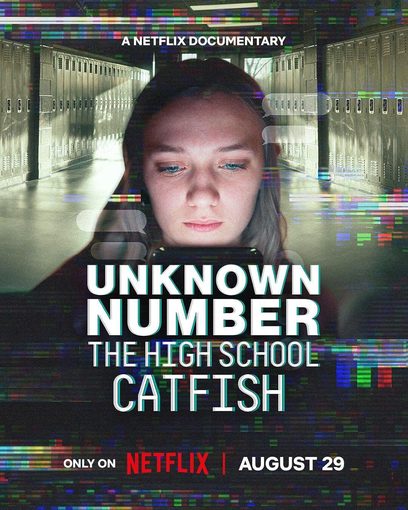
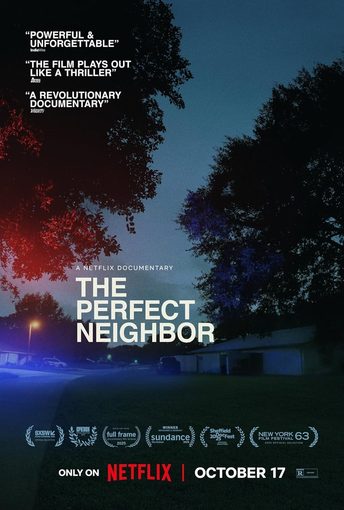
Netflix’s engagement reports provide concrete evidence of true crime’s ability to attract substantial audiences. In the first half of 2026, The Crash, a documentary examining a fatal car collision that became a murder case, accumulated 65.2 million views. The previous six-month reporting period also delivered strong documentary performances: Unknown Number: The High School Catfish achieved 57 million views, Sean Combs: The Reckoning reached 51 million and The Perfect Neighbor attracted 49 million.
However, these figures do not establish that true crime universally outperforms romantic comedies or period productions. Netflix’s People We Meet on Vacation generated 77.7 million views during the first half of 2026, while the fourth season of Bridgerton reached 100.2 million.
The more relevant financial question is therefore not which genre attracts the largest absolute audience, but how much a platform must invest to generate that audience.
A documentary with lower production expenditure may offer attractive cost efficiency even when its total viewing figures fall below those of a major scripted production. Nevertheless, publicly available engagement figures cannot establish profitability without corresponding information about production, acquisition and marketing costs.

How Does True Crime Generate Financial Value?
For subscription streaming platforms, commercial success is not measured through conventional advertising ratings alone. Content can generate value by attracting new subscribers, retaining existing customers, increasing viewing time and strengthening the perceived value of a platform’s catalogue.
True crime has several characteristics that can contribute to these objectives. Its investigative structure creates narrative momentum, encouraging audiences to follow clues, examine conflicting testimonies and continue watching to discover how a case develops. Limited documentary series can therefore generate multiple hours of engagement from a single underlying story.
Another potential advantage is catalogue longevity. Unlike certain programs built around short-lived cultural trends, documentaries about unresolved mysteries, historical investigations or complex criminal cases may remain relevant long after their release. They can also be redistributed internationally through dubbing and subtitling.
Regional demand analysis offers additional insight. According to Parrot Analytics’ May 2025 examination of Latin America, scripted true-crime titles accounted for less than one-fifth of annual releases but generated three to five times more audience demand per title. Unscripted productions made up the majority of releases, contributing to catalogue reach, retention and long-term viewing. The findings indicate that premium scripted crime and lower-cost documentary formats can play complementary commercial roles.
International distribution and secondary rights represent another potential source of revenue, particularly for production companies that retain ownership or distribution rights. The UK producers’ association Pact reported that secondary rights income was an important contributor to the sector’s performance in 2024, with UK rights income increasing to £303 million.
These opportunities depend heavily on the terms of each production and distribution agreement. A fully commissioned documentary with rights assigned to a streaming platform may generate a very different financial return for its producer than an independently financed title that can be sold across several territories.

What Are the Hidden Costs of True Crime?
Despite its potentially economical production model, true crime is not necessarily inexpensive.
Archival licensing, access to witnesses, investigative research and legal review can considerably increase a project’s budget. Productions involving active investigations or disputed allegations may require additional fact-checking and legal oversight. Securing meaningful participation from victims’ relatives, maintaining editorial independence and handling sensitive material responsibly can also extend development schedules.
Competition is creating further pressure. In March 2026, C21Media reported Ampere Analysis figures showing that true crime accounted for 16% of worldwide documentary commissions in 2025, representing 632 new commissions across 22 major media markets. The report also highlighted longer development cycles, tighter schedules and rising expectations for premium production quality.
As the market becomes more crowded, archive-driven storytelling alone may no longer differentiate a title. Commissioners increasingly have reason to look for exclusive access, original investigative findings, distinctive perspectives and cinematic execution.
These requirements may erode some of the cost advantages historically associated with the genre.

How Are Latin America and Asia Shaping the Future of True Crime?
Beyond North America and Europe, Latin America and Asia are opening up new opportunities for the true crime business. According to Parrot Analytics, audience demand for true crime in Latin America continues to outpace the supply of locally relevant productions, highlighting an underserved market for streamers and distributors. Meanwhile, the growing international reach of Asian content is creating further opportunities for local stories to travel beyond their home markets. For producers and buyers, the commercial appeal lies in developing locally resonant stories with international distribution potential. Documentary formats built around investigative journalism, archival footage and interviews can offer an alternative to the higher production costs of scripted crime dramas, although research, licensing and legal clearance remain significant expenses. As platforms seek to balance tighter content budgets with international audience growth, these regions represent potential new sources of both original programming and cross-border distribution revenue.

Is True Crime a Sustainable Investment Strategy?
True crime’s commercial potential rests on the flexibility of its production model. Relatively contained documentary projects can offer substantial audience engagement without requiring investment associated with large-scale scripted productions. Premium scripted crime dramas, meanwhile, can serve a different function by providing high-profile titles capable of attracting attention across international markets.
Yet the viewing figures also demonstrate that romantic comedies and period dramas remain commercially significant. A successful content strategy cannot be derived from genre popularity alone: audience acquisition, retention, production costs, distribution rights and long-term catalogue performance all influence financial outcomes.
For broadcasters and streaming platforms, the central economic consideration is ultimately the relationship between investment and measurable audience value. True crime offers multiple production and distribution models through which that value can be generated, but its financial advantage must be assessed project by project rather than assumed from the genre itself.
Sources and Further Reading
https://www.c21media.net/marketplace/truecrimeandinvestigation26/programming/756648/XXX
https://episodemag.com/true-crime-remains-most-in-demand
https://about.netflix.com/en/news/what-we-watched-the-first-half-of-2026
https://about.netflix.com/en/news/what-we-watched-the-second-half-of-2025
https://www.bfi.org.uk/news/official-bfi-statistics-2025
https://www.pact.co.uk/resource/2025-pact-census-shows-sluggish-growth-in-tv-revenues.html
This article was published in the MIPCOM 2026 issue of 221B Magazine.