
For decades, crime entertainment has asked audiences the same question: Who did it? The next generation of crime formats is changing the proposition by asking a more active question: Can you solve it yourself?
Interactive and unscripted crime formats are increasingly turning viewers into investigators, giving them access to clues, case files, digital evidence and suspects, and sometimes allowing them to influence the investigation in real time. The phenomenon is not confined to the UK or US. Recent examples from Spain and the Netherlands, alongside earlier experiments in Brazil, Singapore and the wider digital market, show how the murder mystery can become a participatory television experience.
The distinction is important. There is a growing market for celebrity murder-mystery shows in which contestants become detectives, but a smaller and arguably more distinctive group of formats puts the viewer at the centre of the investigation.
When the Viewer Becomes the Detective
One of the clearest examples is Antena 3’s Spanish format Una fiesta de muerte, adapted from the Dutch A Party To Die For.
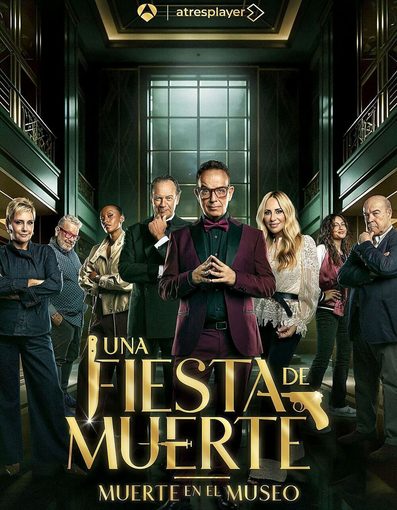

The prime-time game show brings celebrities together around a fictional murder, but the investigation does not stop inside the television programme. Viewers at home can scan a QR code and enter a parallel investigation on their phones. As the programme reveals clues, audiences analyse the evidence, answer questions, accumulate points and attempt to identify the killer before the final reveal.
The format’s second-screen element is not simply a voting mechanism. Viewers are explicitly positioned as investigators and compete for a €3,000 prize.
The Spanish launch in April 2026 demonstrated the scale that this model can achieve. Nearly 29,000 users connected simultaneously to the official app during the first episode, while the accusation stage generated up to 1,150 answers per second. According to Atresmedia, 28% of participants correctly identified the killer. The episode itself attracted a 12.8% share and 3.3 million unique viewers.
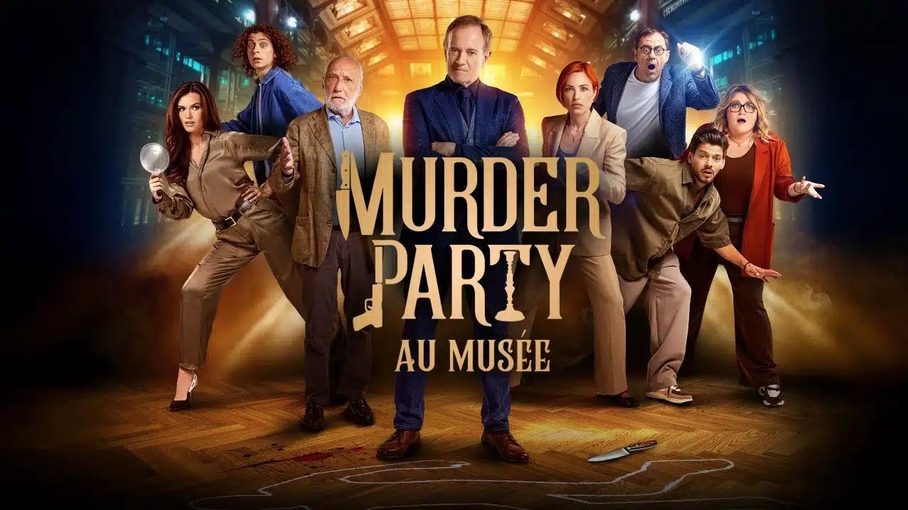
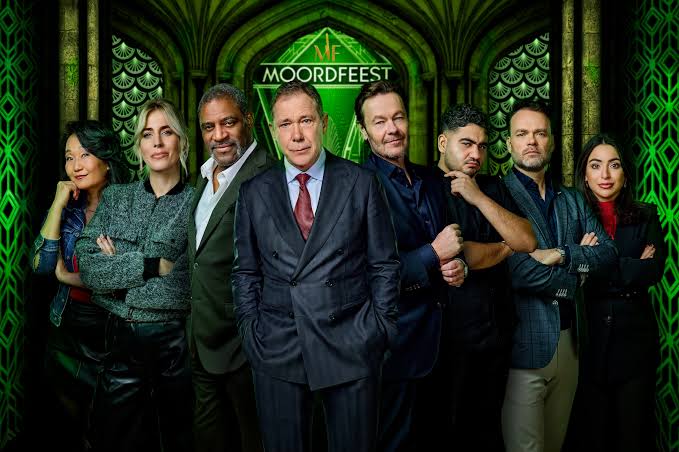
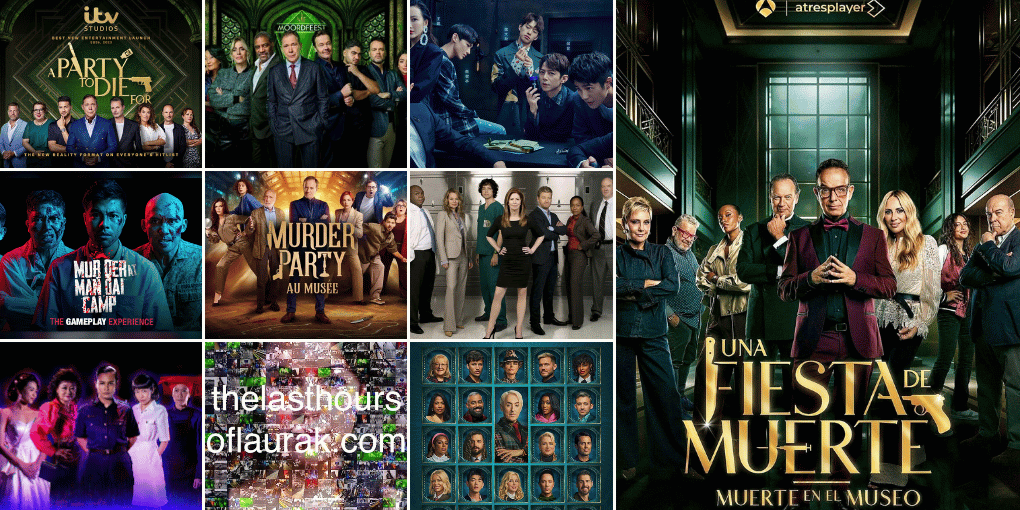
The format has now moved beyond a single market. Originally created in the Netherlands as Moordfeest, A Party To Die For was subsequently adapted in France as Murder Party au Musée for M6 and in Spain as Una fiesta de muerte. ITV Studios describes the format as combining a celebrity murder mystery with a home-play component through its dedicated app.
This makes the Netherlands particularly interesting as a source of international format development: the original show is itself a traditional celebrity-led murder mystery, but its at-home detective layer turns the broadcast into a parallel game.
Before the App: The Last Hours of Laura K
The idea of turning viewers into investigators predates today’s QR-code and companion-app boom.

BBC’s The Last Hours of Laura K is one of the strongest early examples of a genuinely viewer-led crime investigation. The project began as an immersive online murder mystery in which users were given 24 hours of fictional surveillance footage documenting the final day of Laura’s life.
But the footage was only part of the case. To identify the killer, users had to investigate the characters’ digital lives through Facebook, Twitter and Instagram, searching for clues and motives that had been planted by the writers.
In other words, the audience had to leave the programme to investigate the programme.

The format subsequently travelled to Brazil, where Globo adapted it as Prova do Crime. BBC Worldwide described the deal as its first licence of the multiplatform scripted format. The Brazilian version was positioned as a mystery reality format in which the public itself was used within the narrative to uncover the identity of the killer.
Its significance goes beyond its age. It anticipated a model that is becoming increasingly relevant today: instead of adding a quiz to the end of a television programme, producers can design the mystery around audience investigation from the beginning.
Social Media as the Crime Scene
Another early experiment, Framed, took the concept into live social media.
Developed by UK crime channel Alibi and streamed through Facebook Live in 2016, Framed placed viewers inside a murder mystery in which a security guard discovered a body in an art gallery and had a limited amount of time to solve the case.
The audience saw the action from the protagonist’s point of view and worked collectively through comments, suggestions and live voting. Viewers could decide what the protagonist should investigate or do next, while moderators selected audience suggestions to influence the action.
The experiment attracted more than 14,000 views and thousands of comments and votes. Its importance was less about scale than about the model: a single crime scene could become a collaborative investigation involving thousands of remote viewers.
That model has obvious relevance to today’s streaming and social-video environment, where live interaction, polls and mobile participation are considerably easier to integrate.
Asia: Interactive Mystery Beyond Television
Asia offers particularly interesting examples outside the conventional broadcast-format ecosystem.
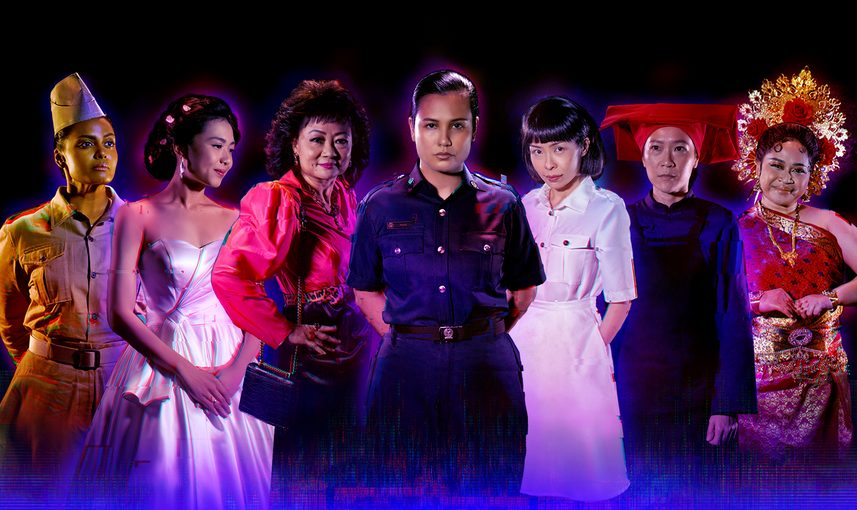
In Singapore, The Bride Always Knocks Twice – Killer Secrets combined digital theatre, live interrogation, online case files and virtual crime-scene investigation. Audiences followed a murder involving seven women from different generations and were required to investigate across several chapters and platforms. The production described itself explicitly as a “multi-platform interactive murder mystery.”

Another Singapore production, Murder At Mandai Camp, used Zoom to turn audiences into the lead investigator. Viewers were given evidence through the live performance, used chat to record and connect clues, and ultimately voted collectively on the identity of the killer.
These projects are not conventional television formats, but they reveal an important international trend: the interactive murder mystery can exist somewhere between television, theatre, gaming and live events.
That hybrid space may become increasingly relevant to broadcasters looking for formats that can generate both linear viewing and direct participation.
The Physical Game Is Also Becoming Digital
The other side of the trend is the adaptation of murder-mystery games themselves.
China’s jubensha phenomenon is particularly relevant here. In these social murder-mystery games, participants receive individual character information, secrets and motives and collectively investigate a fictional crime. Although jubensha is primarily a physical entertainment market rather than a television format, it demonstrates the strength of the consumer appetite for participatory mystery.
The same principle is now being incorporated into digital experiences. New murder-party platforms allow players to access evidence, documents, DNA information, fingerprints and videos through smartphones and QR codes, effectively turning a traditional box-game or live murder party into a digital investigation.
This creates a potentially interesting format pipeline:
board game → murder-party experience → digital interactive game → television format → multiplatform television/game hybrid.
The screen adaptation does not necessarily have to reproduce the original game. Instead, it can borrow its strongest mechanic: every participant has information, but nobody has the complete picture.
Not Every Murder Mystery Is an Interactive Viewer Format
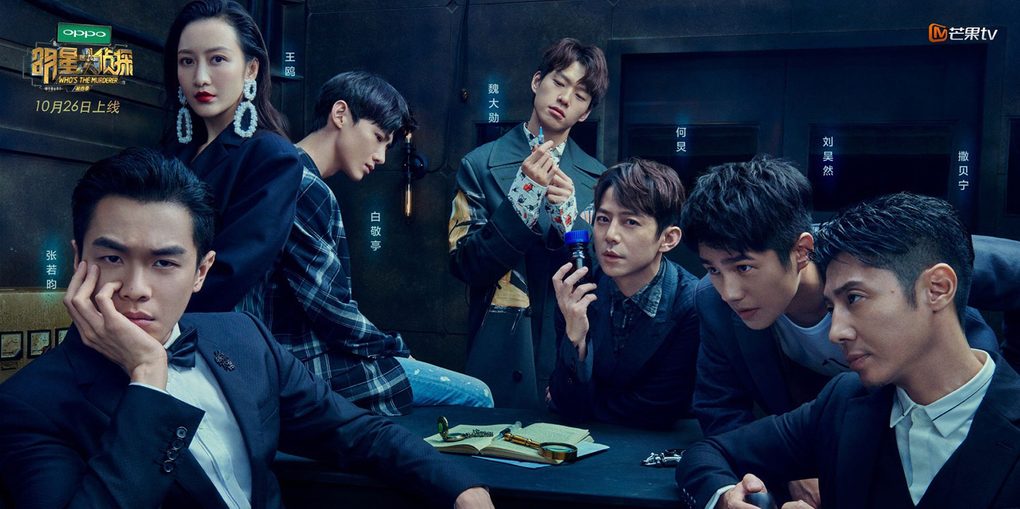
The distinction becomes especially important when looking at successful unscripted crime shows such as South Korea’s Crime Scene, China’s Who’s the Murderer and the Dutch The Traitors.
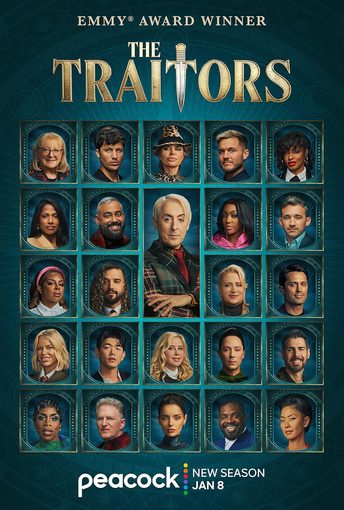
These programmes are highly relevant to the broader crime-format trend, but they should not technically be described as shows in which viewers become detectives.
In Crime Scene, for example, the players investigate a staged murder, take on suspect roles and try to identify the killer. The audience watches and can attempt to solve the case alongside them, but it does not control the investigation.
Likewise, A Party To Die For is primarily a celebrity detective game: the celebrities investigate the fictional murder, while the audience receives a separate opportunity to play along through the app.
The Traitors goes further away from the viewer-as-detective model. Its core mechanic is social deduction among contestants, with the audience acting as an observer who can form its own theories about the hidden Traitors.
These formats are nevertheless important because they demonstrate the adjacent market for crime-based deduction. They show that audiences are willing to spend an entire episode analysing behaviour, clues and deception; even when the investigation remains inside the television programme.
Where the Opportunity Lies
The most interesting opportunity may therefore sit between traditional unscripted crime and fully interactive gaming.
The strongest viewer-led formats share several characteristics:
- Evidence is distributed throughout the programme, rather than presented as one final clue.
- The viewer has a reason to investigate, rather than simply vote.
- The answer is not immediately obvious, allowing theories to develop.
- Participation happens during the broadcast, creating urgency.
- A second screen expands the fictional world, rather than simply providing a poll.
- There is a measurable outcome — a score, ranking, prize or successful accusation.
Technology makes these mechanics increasingly accessible. A smartphone can now function as the viewer’s detective notebook, evidence archive and voting device simultaneously.
The international examples also suggest that the format does not need to look the same in every market. Spain has turned the concept into a prime-time family game show; the Netherlands has combined celebrity mystery with second-screen play; Brazil has explored multiplatform storytelling; Singapore has blended interactive theatre with digital investigation.
The next step could be a format in which the distinction between television and game almost disappears: a fictional crime unfolds on screen, viewers receive individual clues on their phones, social media accounts contain additional evidence, live choices influence what information becomes available, and the final accusation is made by the audience itself.
That is a different proposition from simply watching celebrities play detectives.
It is closer to turning an entire television audience into a detective agency.
And that may be the most interesting direction for interactive crime formats: not asking viewers to watch a mystery being solved, but giving them enough evidence -and enough agency- to believe that they are the ones solving it.
Sources:
This article was published in the MIPCOM 2026 issue of 221B Magazine.